Stamford, CT

Stamford Crime Scene Cleanup in Towers, Lofts and Houses

What to do, who to contact, and what to ask in Stamford.

After a violent crime in a Stamford tower, loft or house, see when cleanup can start, how freight elevators come into it, and what to keep.

Get an email reply about crime scene cleanup

Send a short message to the follow-up inbox. A coordinator can reply by email. This form does not send emergency help; call 911 first if anyone is in danger.

Tell us what you need help with. Share a short description; please leave out medical details, access codes, and other sensitive information.

A request does not confirm a booking. For immediate danger, contact local emergency services.

Or email info@traumascenecleanup.online

The short answer for Stamford, CT

Stamford is a city of towers, lofts and close-set houses, so cleanup after a violent crime often runs through a freight elevator and a building manager. Police must release the unit first, and a trained biohazard company should do the work. Here is what to ask and what your board, landlord or insurer will want.

What to do, step by step

  1. 1

    Confirm the release and sort unit from shared areas

    Confirm the official release. Then find out whether the affected area is inside your unit or in a shared hallway, elevator or lobby. Write down the board officer or manager who controls freight settings, alarms and keys. Have the shared areas photographed before covers go on, so costs are easier to split later. If you rent, email the building manager the day police release the unit. In most Stamford rentals, management hires the crew for the apartment and the halls.

  2. 2

    Book the freight elevator and a private cart path

    Work out the route from your unit to the freight elevator and the dock with the company. Hallway runners and elevator pads should go in before your first bag moves. Downtown and Harbor Point sidewalks are busy, so bins should go straight from the dock into the truck. Many towers require booked freight times and advance notice to management, and a missed booking can leave your unit open longer. Log each freight booking and any temporary pass given out.

  3. 3

    Ask what can be saved in the unit

    Quartz, tile and metal in your unit can usually be kept. They are disinfected after the heavy soil is gone and stay wet for the full label time. Your soaked carpet, pad and drywall are sealed inside the unit before any of it heads to the freight elevator. Fingerprint powder calls for a HEPA vacuum, so dust does not enter air returns shared with other units. In a loft with gaps between old planks, ask the contractor to check the unit underneath. Ask for a record of each keep-or-remove choice.

  4. 4

    Wait for moisture readings, then file with the building

    A sealed tower with central air dries in its own way, so ask for moisture readings before the final check. Gather your photos, product lists, waste notes, records of how shared areas were protected, and a hand-off for the rebuild. Keep the records with your unit file for the board, landlord or insurer, and for future tenants. If you carry renter's coverage, save every hotel and storage receipt alongside them.

What cleanup is like in Stamford

Stamford is the largest city in Fairfield County, with about 136,000 people. Its homes differ from the Gold Coast estate towns nearby. You may live in a high-rise or podium condo downtown or at Harbor Point, or in a loft in an old South End warehouse. Or your home may be a garden apartment or a house in North Stamford. After police release your home, the crew deals with freight elevators, hallway runners and loading docks as often as with driveways. What city living adds is shared walls, steady foot traffic, and a building manager who controls keys and waste routes.

Being discreet is harder where people live close together. Tower lobbies, valet courts and street-level shops make open carts easy to spot. South End streets mix residents, office workers and visitors to the waterfront. A single-family pocket feels quieter, but your house still sits closer to the neighbors than on a backcountry estate. Ask for bags no one can see into, a padded elevator and few words in the lobby. You can still talk openly with your board and manager. In a condo, quiet hours and freight booking rules often decide the order of work more than the cleaning products do.

Your papers may go to an HOA board, a landlord, a corporate relocation manager or an insurer. City offices can help with parking and permits, and the state health department can answer general health questions. In a Harbor Point or downtown tower, have the hallway, freight cab and loading dock photographed before any covers go up. That puts existing wear on record. When both the building's master policy and your unit policy may apply, ask that work inside the unit be listed apart from shared areas. City heat and coastal humidity affect drying. In a tower, the air system can also move dust if powder cleanup is not controlled.
What to expect for your type of home

  • High-rise and podium buildings: You need a freight or padded elevator plan and hallway runners. Get written permission for short closures when carts pass lived-in units.
  • South End lofts: Open floors, exposed ducts and shared stairwells carry odor and dust farther than a closed suburban bedroom would. Ask how the crew will contain both.
  • Garden apartments and older walk-ups: Ask for stair covers and quiet paths past any courtyard where children play. Your neighbors use those stairs every day.
  • North Stamford houses: You still need a driveway setup plan. Shared side yards and houses set close to the street mean neighbors see more than on Gold Coast acreage.
  • Newer tower units: Marble, vinyl plank and engineered wood may clean on top while seams and underlayment hold residue. Ask the crew to check the edges where floors meet.
  • Older garden apartments: Carpet over a soaked pad nearly always has to go. Air fresheners do not fix it, so do not accept them as a substitute.
  • Towers with fob systems: Front-desk logs show who went in. Ask management to turn off temporary fobs on the day the work ends and to keep a copy of the log for your file.
  • Buildings that share a loading dock with shops or offices: Waste trips should be timed to avoid peak deliveries. Ask management which hours are open.

Papers and records to keep

  • The Stamford police release date and the building staff member who opened the unit.
  • Photos of rooms, closets, baths, balconies, hallways and elevator cabs, before and after covers.
  • Freight elevator bookings, dock times and hallway covers arranged with management.
  • What was cut out of the unit and what was cleaned, marked on the unit plan.
  • Products used on vinyl plank, quartz and tile, with each label wet time and surface.
  • How police residue was removed, with notes on air filters tied to shared returns.
  • A dock pickup record for your board and insurer.
  • A pass log of temporary fobs or codes given out and turned off after the work.
  • A memo for you and building management listing rooms closed until flooring or drywall is replaced.

Local offices and official help

Common questions in Stamford

How do freight elevator rules change the order of the work?

They put paperwork and covers first. Many Stamford towers require booked freight times, padded cabs and advance notice to management before any debris or sealed waste moves. Removal of soft materials is then timed to the freight slot, instead of loading at the curb all day. Missing a booking can stall the waste and leave your unit open longer. Have the booking and any after-hours loading rules recorded in the access log. Your board and insurer will want that trail when shared-area costs show up on a claim.

Why keep the unit and the shared areas separate on paper?

Because different people pay for them. Stamford condo and rental buildings often split who is in charge of the inside of a unit and who handles shared halls, elevators and lobbies. Blood or tracked residue may affect both. A written work list that keeps unit demolition apart from shared-area protection helps split costs between your unit policy and the master policy. Ask for photos of the bare corridor carpet and cab walls before protection goes down. That avoids arguments partway through about who pays for what.

How is a South End loft different from a North Stamford house?

Dust and odor travel farther in a loft. Lofts often have open floors, shared stairwells and industrial finishes, while houses have driveways, side yards and closed rooms. In a loft, the check follows the floor through the open space and includes shared air returns. In a house, it follows the mudroom and attached garage. Privacy differs too. A loft faces sidewalks and waterfront visitors, while a house faces neighbors who know a quiet block. Both need the release, label wet times and tracked waste.

Which finishes in a newer tower usually cannot be saved?

Luxury vinyl plank, engineered wood and carpet can all hide residue at the seams and in the underlayment, even when the top looks fine. Stone or tile may clean on the surface after soil removal and a labeled disinfectant, but the grout and edges still need a check. Ask for a photo of each opened edge for your rebuild crew. If odor comes back in a sealed, air-conditioned unit, the usual cause is underlayment or pad left next to a floor that was cleaned.

What should our board require before letting a contractor in?

After the release, check the condo documents to see whether the affected area belongs to the unit or the association, and who can approve the work. Have the halls photographed before they are covered. Share work hours and closed areas with residents in plain terms. Keep waste records with the building file. Clear approval avoids mixed orders about elevators or short closures in a Stamford building. It also helps with insurance when more than one policy may apply.

I rent. How do I work with my landlord?

Email the building manager the day police release the unit. Usually the building's management picks the company for both your unit and the shared halls. But you may need to approve what happens to your belongings. Ask for a copy of the work list and photos of your items before anything is removed. If you carry renter's coverage, it may pay for your belongings and a place to stay. Save every hotel and storage receipt.

Our loft is in an old factory building. Does it need a different check?

Yes. Old factory buildings often have concrete or old wood plank floors, exposed brick and open ceilings, which soak up fluid differently than newer drywall and vinyl. Brick and unsealed concrete can hold residue in their pores. Gaps between old planks can let fluid reach the space below, so ask the contractor to check the unit underneath. Open ceilings also let dust from powder cleanup travel farther. Containment needs extra care in a South End conversion.

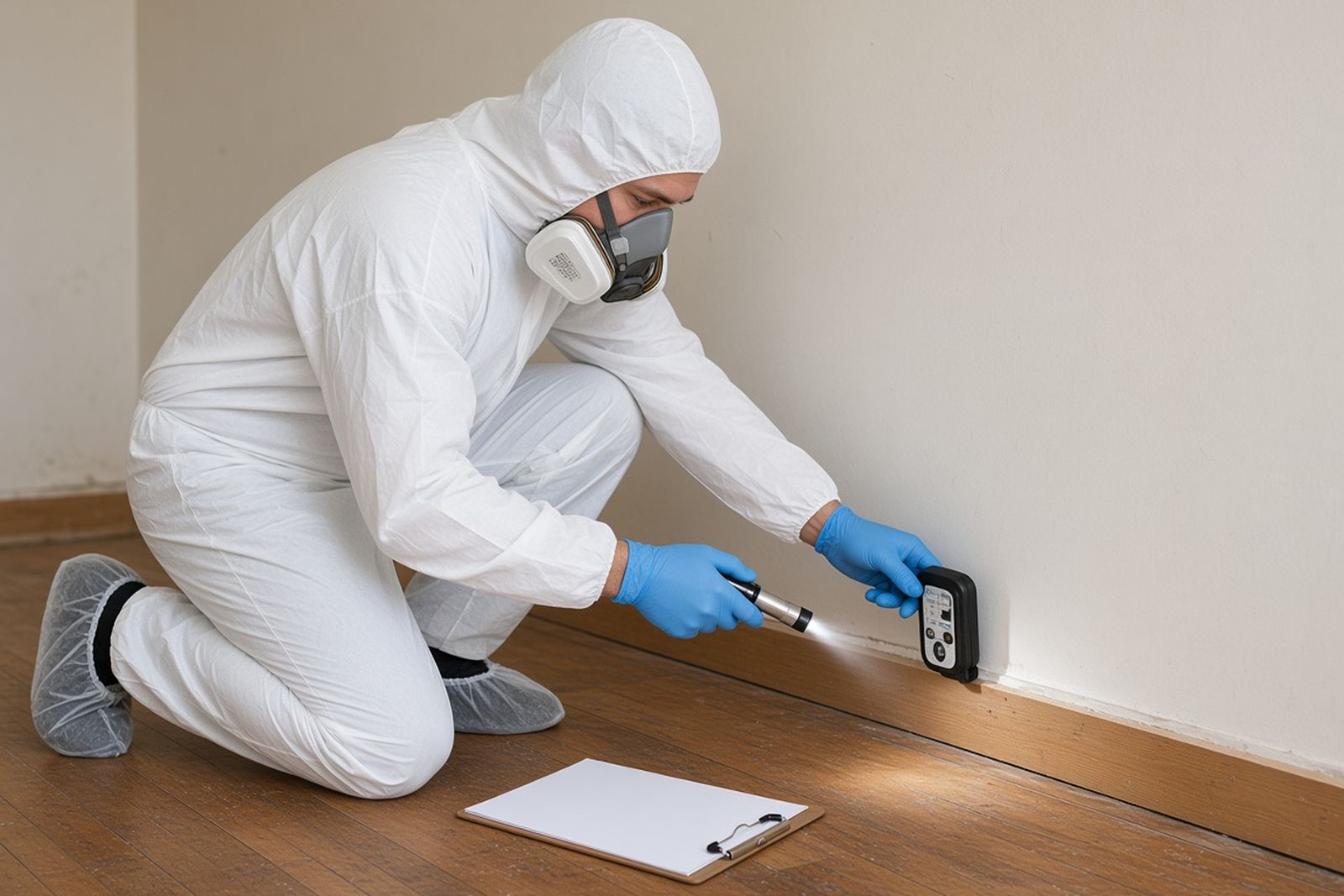
Technician in coveralls and a half-face respirator checking a baseboard with a flashlight and moisture meter
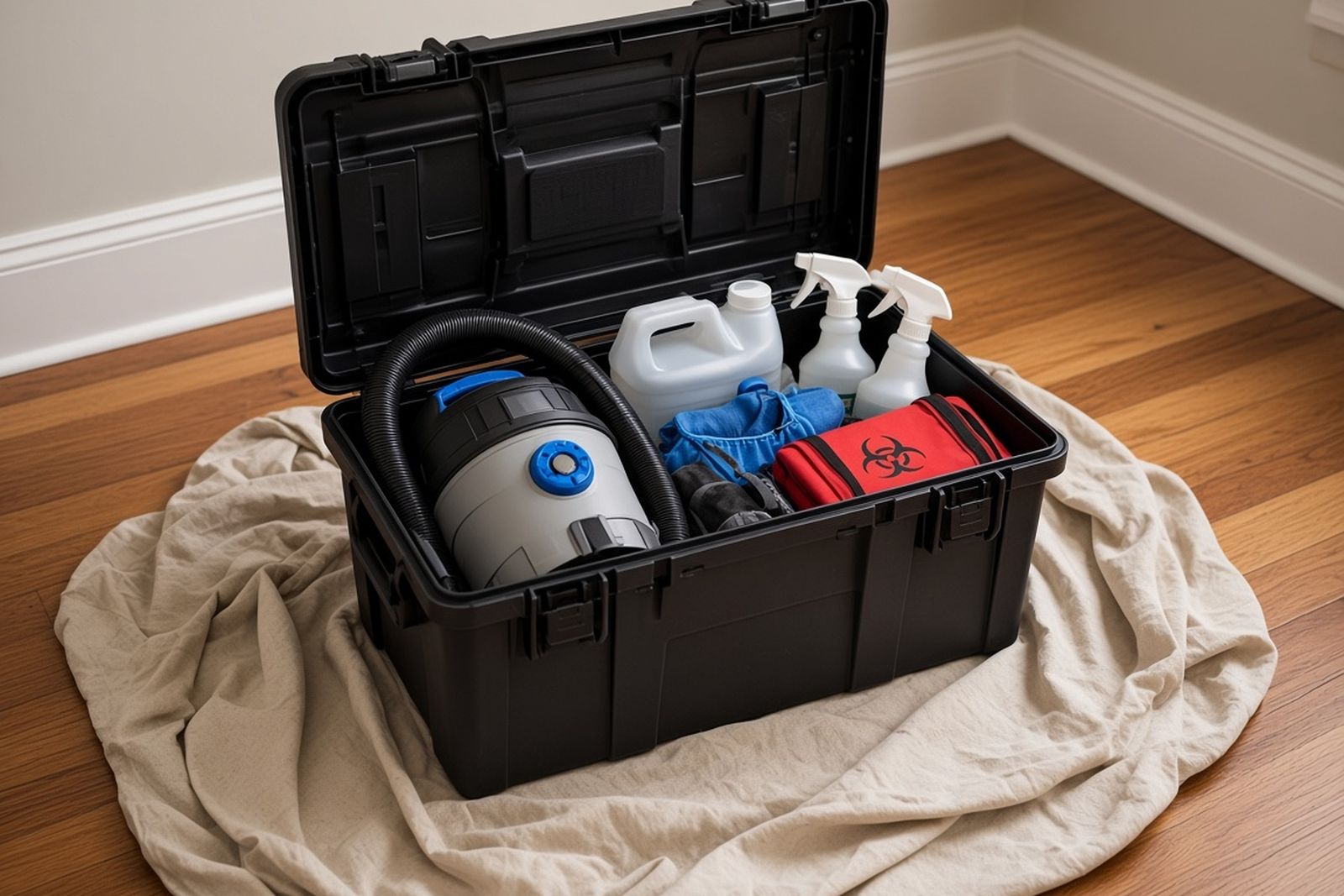
Open equipment case on a drop cloth holding a HEPA vacuum, disinfectant jugs, spray bottles and red biohazard bags

Facts worth knowing

  • In interviews with 18 people in Germany who lost someone to suicide, some said others with a similar loss understood them without long explanations.

    Why it matters: If explaining yourself is tiring, you may find a suicide-loss support group easier than talking with people who have not been through it.

    Source: Marek et al., 2024

  • In interviews with 15 grieving German adults, some valued company that came with no pressure to talk.

    Why it matters: If you are supporting someone, you may help just by sitting with them; you do not have to find the right words.

    Source: Marek et al., 2025

  • In a survey of burglary victims in three English areas, published in 2005, quick help making the home secure was one of the main practical needs.

    Why it matters: Ask whether the company you call can board up or secure broken doors and windows on the first visit.

    Source: Victim Support et al., 2005

Tools that help right now

What would you do?

Poll results

Vote to see how other people answered. You can change your answer at any time.

Your experience

What was the hardest thing to figure out in the first day after the scene was released?

Be the first to vote
General

Which type of incident brought you to this topic?

Be the first to vote

Need help in Stamford?

Send a short message about the property to the follow-up inbox. A coordinator can reply by email with next steps.

Your request is sent to the follow-up inbox. A coordinator can reply by email.

If anyone is hurt or in danger, call 911 first.