Scarsdale, NY

Crime Scene Cleanup in Scarsdale Tudors, Colonials and Cellars

What to do, who to contact, and what to ask in Scarsdale.

What to do after a violent crime in a Scarsdale home: check the basement, load quietly through the garage, and keep the records your insurer wants.

Get an email reply about crime scene cleanup

Send a short message to the follow-up inbox. A coordinator can reply by email. This form does not send emergency help; call 911 first if anyone is in danger.

Tell us what you need help with. Share a short description; please leave out medical details, access codes, and other sensitive information.

A request does not confirm a booking. For immediate danger, contact local emergency services.

Or email info@traumascenecleanup.online

The short answer for Scarsdale, NY

Your Scarsdale home needs trained help after a violent crime, not family or household staff with mops. Once police release the house, call a biohazard cleanup company. Here is what to expect in a Tudor or colonial with a finished basement, how to keep things quiet at the curb, and what to save for your insurer.

What to do, step by step

  1. 1

    Get the release date and list every level

    Ask the officer or detective on your case when your house is released, and write the date down. Then walk through it in your mind, level by level. Include the finished basement, the garage and any caregiver rooms. Take photos of the mudroom and walkway doors before furniture moves. If a trustee holds title, ask whether the trustee must approve cutting out finishes. Point out the air returns to the company too, since fingerprint powder can spread through them.

  2. 2

    Plan a quiet route through the garage

    Ask the company to move dirty items through your garage or side mudroom, not down the formal front walk. Bins should be covered and kept off the public sidewalk. If you can, have the crew wait until morning school drop-off has passed. Give out any temporary door or alarm codes in writing only. Cancel each code the day the project ends, and note that you did.

  3. 3

    Ask what stays and what is cut out

    A good crew clears the heavy soil first. Then it wets hard surfaces worth saving with an EPA-registered product for the full label time. Soaked carpet, pad or plaster that cannot be checked gets packed as regulated waste. That can be hard to watch in a home you love. Ask for a written note on each keep-or-remove choice, tied to the room. Your lawyer and insurer will both want to see it.

  4. 4

    Wait for the basement to dry, then build your file

    Below ground most of all, nothing should be signed off until it is truly dry. Expect the notes to cover baths, the kitchen and the paths the crew used. Floor and plaster repairs go to other trades, so ask for a list of the openings to hand them. Store the disinfectant names, waste records and photos with your house file. Your lawyer and insurers may ask for them months later.

What cleanup is like in Scarsdale

Scarsdale is a compact Westchester village of about 18,000 people. Most of you live in a Tudor, a colonial or a newer house on a lot shaded by tall trees, though some apartments sit near the train station and village shops. In a house, the cleanup usually runs up and down, from the main floor to a finished basement. Blood can soak into parquet borders, wall-to-wall carpet and plaster, so the work may reach past the stain you see. Damp shade from the leaves and cool evenings also mean your rooms will take longer to dry after wet cleaning.

Your front lawn may feel private, but an open truck on a dead-end lane gets noticed by neighbors who know every car. Curb life here follows school drop-off and commuters walking to Metro-North, not an HOA gate. A good crew will carry waste out through your attached garage or side mudroom, in covered bins, along one protected path. Federal OSHA rules on blood and medical waste apply even in a quiet village. The disinfectants should be EPA-registered and left wet for the time on the label. You can ask the company to explain both.

You may not be the only one who needs the paperwork. Your family's lawyer, an insurer with high coverage limits or a corporate trustee who holds title may each want a copy. Village offices and the Westchester County health pages can answer local questions. If police went into the basement rec room, the attic stairs or the radiator nooks, ask for photos of those spots. Basement slabs dry slowly, so the final check should wait until they are truly dry. Ask for a repair list that keeps painting separate from the biohazard sign-off.

What to expect for your type of home

  • Shaded lots with brick or bluestone walks: Ask the crew to tape off one route for dirty items. That keeps residue off the lawn where your children play on the way to the sidewalk.
  • Finished basements: These rooms often pick up tracked residue and hold moisture. Tell the company if anyone went downstairs, and expect drying there to take longer than upstairs.
  • Attached garages: The crew may keep tools and sealed waste here during the job. Ask them to check the slab, any stored fabrics and the doorway into the house.
  • Caregiver rooms with their own door: If a live-in caregiver has a separate entrance, more than one adult may control access. Get a separate written okay before work starts there.
  • Half-timber plaster and leaded glass: Fluid can hide at the edges of plaster, glass sills and thick wool carpet borders. Ask the crew to look past the first stain.
  • Apartments by the train: You will not have a driveway to work from. Ask your building what stair or elevator padding it requires and when carts may move.
  • Homes with alarms and camera doorbells: If you set up temporary codes or quiet the alarm for the crew, write each change down and reverse it when the job ends.
  • Sprinklers and leaf piles: Water against the foundation can re-wet cleaned outside doors. Pause your sprinklers and clear leaves from the walls while things dry.

Papers and records to keep

  • Proof of the police release, naming who received the notice for your home.
  • Photos of each floor, including the basement, garage, caregiver room and attic stairs if used.
  • Notes on the garage setup, school-hour timing and every code given out and canceled.
  • A keep-or-remove list matched to a simple sketch of each floor.
  • The products used on each level, main floor to basement, with their wet times.
  • How fingerprint powder was removed and anything the crew saw at the air returns.
  • A description of how regulated waste was packed, for a high-limit insurance claim.
  • Photos of the outside walks and the mudroom doorway.
  • A family note listing bedrooms or basement rooms that wait on repairs before use.

Local offices and official help

Common questions in Scarsdale

Should the crew work around school drop-off and pickup?

Yes, if you can arrange it. At those hours narrow Westchester lanes fill with parents who spot a strange truck right away. Moving waste through the garage after the rush passes keeps the scene at the curb small. It does not change how the cleaning itself is done, and bins should still be covered. Ask the company to note the timing in its job log. That way your insurer can see why work paused for part of the day.
Nothing happened in the basement. Why does the crew want to look there?

Because people often go down there afterward, to the laundry, storage or a den, and carry residue on their shoes. A Scarsdale basement also stays damper than the rooms above, so odor can linger in the carpet even when the upstairs looks done. Ask for photos of the stairs and any soft items stored on the floor. A note saying nothing was found is still worth having. Hold the final check until the cellar carpet and slab have dried out.

Our caregiver has a suite with its own door. Who approves work there?

It may not be only you. A suite with its own outside door can be treated as separate living space, even when one owner holds title to the whole house. Before any carpet or plaster is cut there, agree on who signs off. Ask for photos of the hall that links the suite to your kitchen or laundry. Two separate lists help your insurer see why two areas appear. Settling it early keeps the crew from being sent home mid-job.

What usually has to come out of a Tudor or colonial?

Soaked wall-to-wall carpet and pad, wool borders, wet plaster or drywall at the baseboards and fabrics usually go. Parquet may clean on top while the edges fail, so ask the crew to look into radiator nooks too. Sealed tile and many metals can often stay once they are cleaned and disinfected for the label time. Have each opening written into the repair list. If a smell returns weeks later, padding or wool left beside the saved boards is a likely cause.

What will my insurance company want to see?

Mostly clear facts. Ask the cleanup company for photos tied to a sketch of each level and a list of soft materials removed. It should name the disinfectants and wet times, say how powder was cleaned up and show where the waste went. Basement and garage photos belong in it if those areas were involved. A pleasant scent is not proof of anything. Keep the packet with your title papers in case questions come up at a sale or refinance.

Our Tudor has old plaster and leaded windows. Can they be saved?

Often, yes, at least in part. Glass and sealed trim can usually be cleaned. Plaster and unsealed oak drink in liquid, so a few pieces may have to come out. Ask the contractor to protect original features that were not affected. If a piece of original woodwork must go, ask that it be photographed and measured first. A craftsperson can then match it during repairs, so your Scarsdale home still looks like itself.

What do I tell neighbors on our quiet street?

Very little. You do not need to explain what happened. A short note saying repair work is under way for a few days, with the hours trucks will be parked, is enough. On tree-lined Scarsdale streets, people notice strange trucks, so ask the contractor to use unmarked vehicles if possible and park in your driveway. If neighbors ask questions, send them to one family member or friend who can answer briefly and kindly.

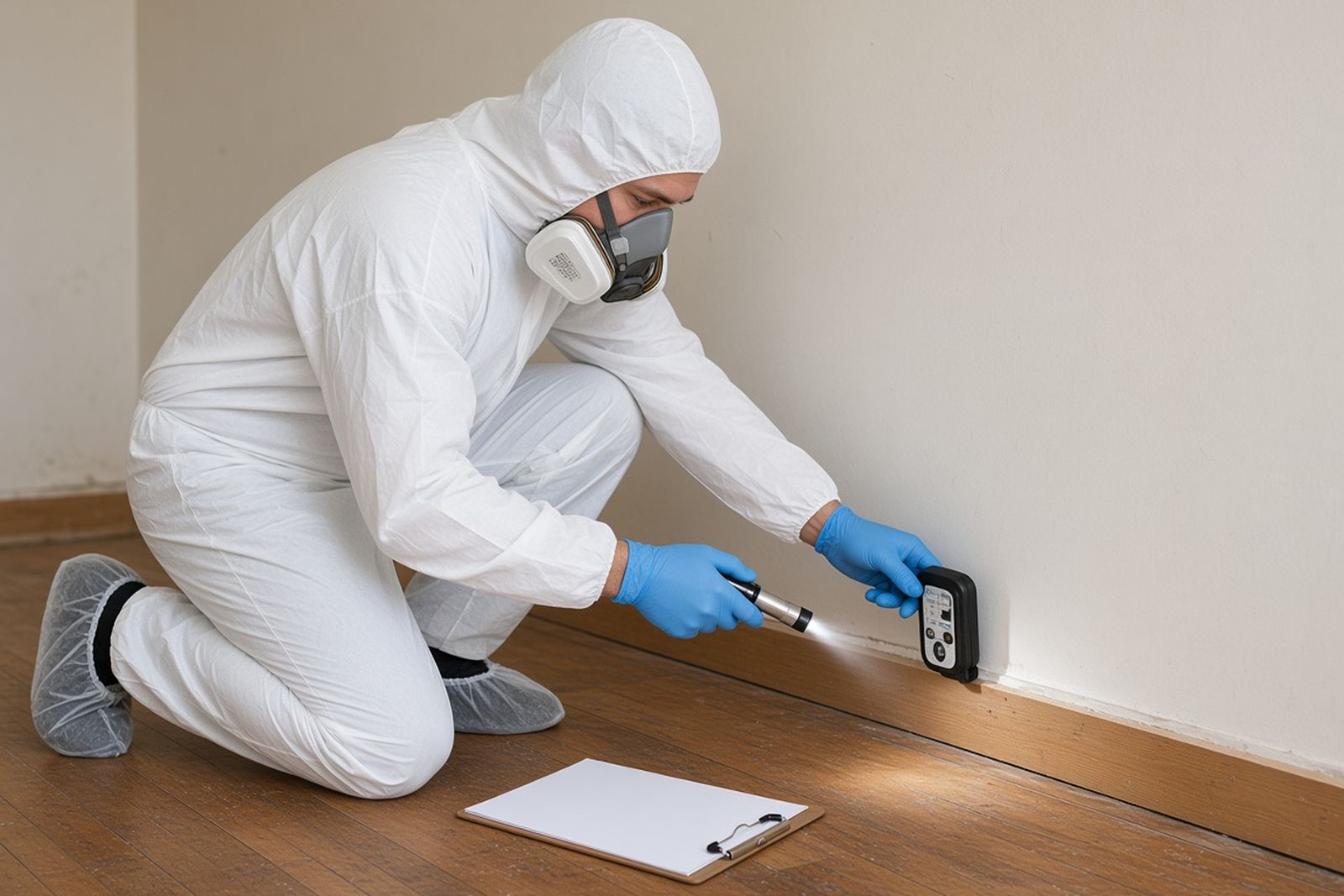
Technician in coveralls and a half-face respirator checking a baseboard with a flashlight and moisture meter
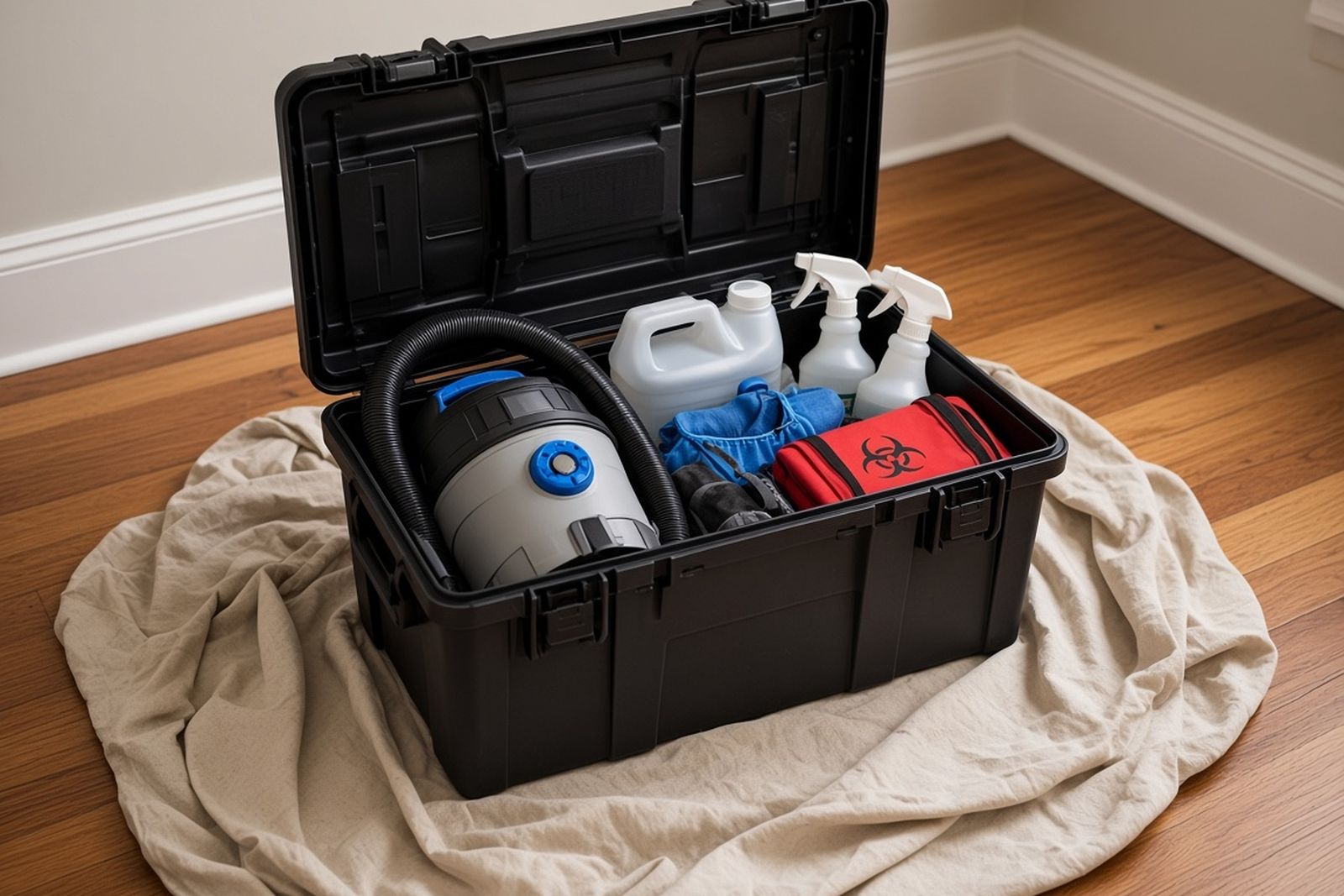
Open equipment case on a drop cloth holding a HEPA vacuum, disinfectant jugs, spray bottles and red biohazard bags

Facts worth knowing

  • Some insured flood victims in a study published in 2022 said their premiums went up a lot after they made a claim.

    Why it matters: Before you file, you may want to ask your insurer or agent how a claim could affect what you pay later.

    Source: McKenzie et al., 2022

  • Ohio's Crime Victims Compensation Program pays back no more than $750 per claim for crime scene cleanup, under its fiscal year 2024 rules.

    Why it matters: This may not cover the full bill, so ask your insurer and the cleanup company about the rest before work starts.

    Source: Ohio Attorney General, 2024

  • Flooded residents in New Brunswick focus groups said the paperwork for insurance and government compensation was confusing.

    Why it matters: Expect the forms to take effort, and ask your adjuster or a local aid office to walk you through them.

    Source: Woodhall-Melnik et al., 2019

Tools that help right now

What would you do?

Poll results

Vote to see how other people answered. You can change your answer at any time.

Your experience

What was the hardest thing to figure out in the first day after the scene was released?

Be the first to vote
General

Which type of incident brought you to this topic?

Be the first to vote

Need help in Scarsdale?

Send a short message about the property to the follow-up inbox. A coordinator can reply by email with next steps.

Your request is sent to the follow-up inbox. A coordinator can reply by email.

If anyone is hurt or in danger, call 911 first.