Short answer
For each item on the list, ask what it does, why your scene needs it and how its use will be recorded. Protective gear should match the hazards. Disinfectants should be EPA-registered for germs carried in blood and used as the label directs. Air filtering should fit the work, and the tools used for final checks should leave you with records. Be wary of equipment that is vague, excessive or unexplained.
Why the equipment list deserves a close look
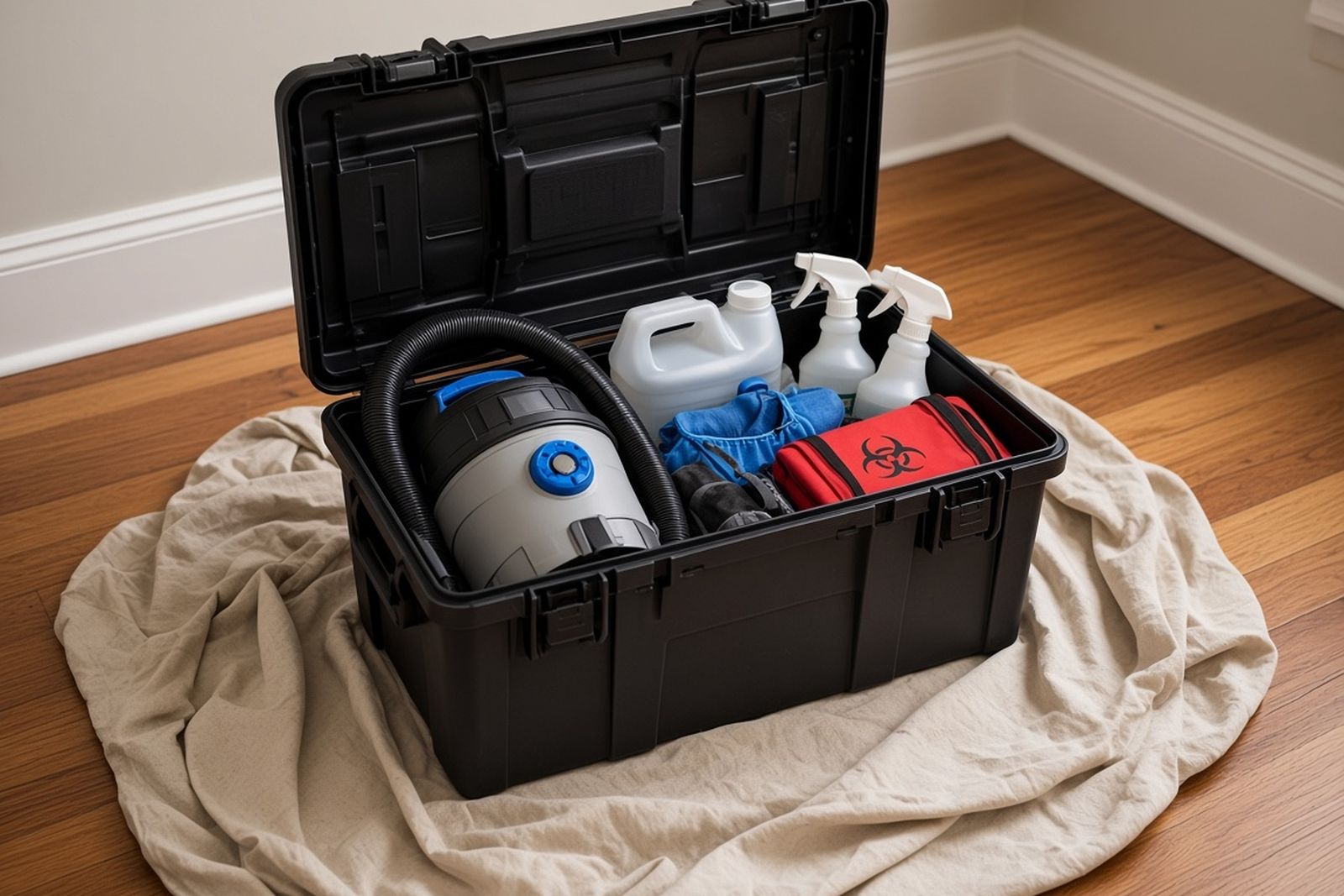
A written offer for crime scene cleanup often includes a list of equipment and materials: suits, breathing masks, disinfectants, air machines, foggers and more. It can look technical and impressive. It is easy to assume that more equipment means better work. That is not always true. Here is how you can read the list.
The equipment list tells you how a company plans to handle your scene. Good lists are specific and tied to what the worker really saw. Weak lists are generic, padded or copied from a template. Knowing how to read one helps you compare companies fairly. It also helps you avoid paying for gear that does nothing for your home.
You do not need technical training to do this. You only need to ask three questions about each item. What does it do? Why does this scene need it? And how will I know it was used correctly?
Keep in mind that equipment is a means, not a result. What you are really buying is a room free of hazards from blood and body fluids, and a clear record of how that was done. Every item on the list should serve one of three ends. It should help reach that result, protect the crew or protect the rest of your property during the work.
What protective equipment should the crew wear?
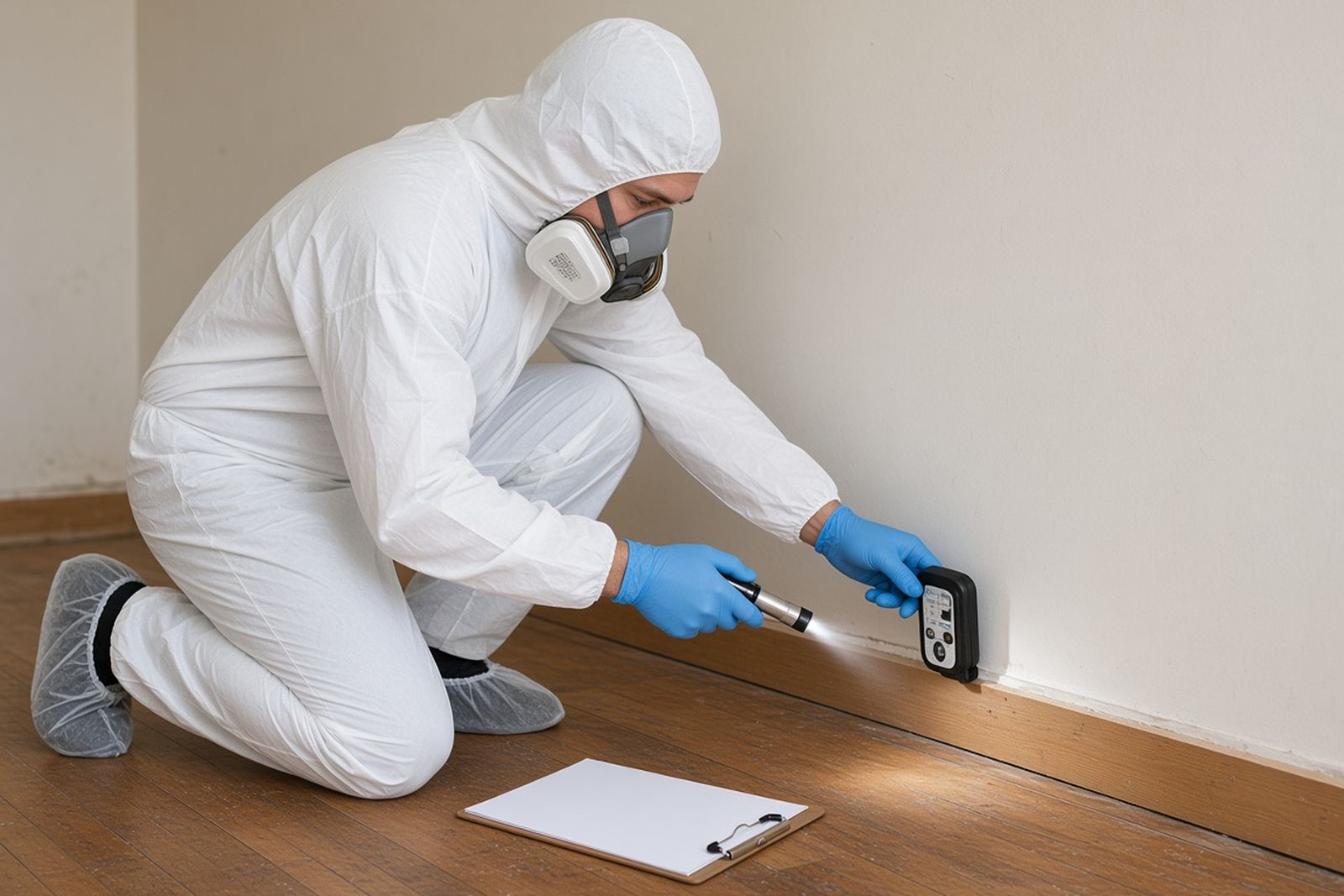
Crews face germs carried in blood, sharp objects, chemical products and sometimes dust from removed materials. Their employer is expected to provide protective gear suited to those risks. For crime scenes, that usually means fluid-resistant coveralls, nitrile gloves, eye and face protection, and shoe covers.
Breathing protection depends on the task. Fine spray from cleaning, dust from cutting drywall or flooring and strong disinfectant fumes can each call for a different respirator or filter. A respirator is a fitted breathing mask. Employers who require respirators are expected to run a program that includes fit testing and training. It is fair to ask a company whether its workers are fit tested for the masks they will wear.
Protective gear should be thrown away after use or cleaned under a written procedure. It should be taken off in a set area so the mess does not travel through your home.
- Fluid-resistant coveralls with hoods and boot covers
- Nitrile gloves, often worn in two layers, plus cut-resistant gloves for glass or sharp objects
- Safety glasses, goggles or face shields
- Respirators matched to fine spray, dust or chemical fumes, with fit testing
Cleaning and disinfecting products
Two kinds of products belong at a crime scene, and they do different jobs. Cleaners, such as detergents and enzyme formulas, break down and lift blood and tissue. Disinfectants kill germs that remain on a cleaned surface. An offer that lists only one of these is incomplete. Ask about the missing one.
Disinfectants should be registered with the EPA and labeled for the germs found in blood, such as hepatitis B and HIV. Ask for the product name so you can read its label. Look for the contact time, which is how long the surface must stay wet. Look for the surfaces the product is approved for. A company that uses the product correctly should be comfortable explaining those details to you.
Watch for vague descriptions like "hospital-grade solution" or "proprietary sanitizer" with no product name. Those phrases may be accurate. But without a name and label, you cannot check what the product does or whether it suits your surfaces.
Scrubbing tools matter as well. Soft brushes, non-scratch pads and throwaway cloths let crews clean finished wood, painted walls and electronics without damage. Stiff brushes may be used on grout and concrete. Tools that touch soiled surfaces should be thrown away as waste. Otherwise they should be cleaned and disinfected under a written procedure before they are used again.
Air scrubbers, containment and odor equipment
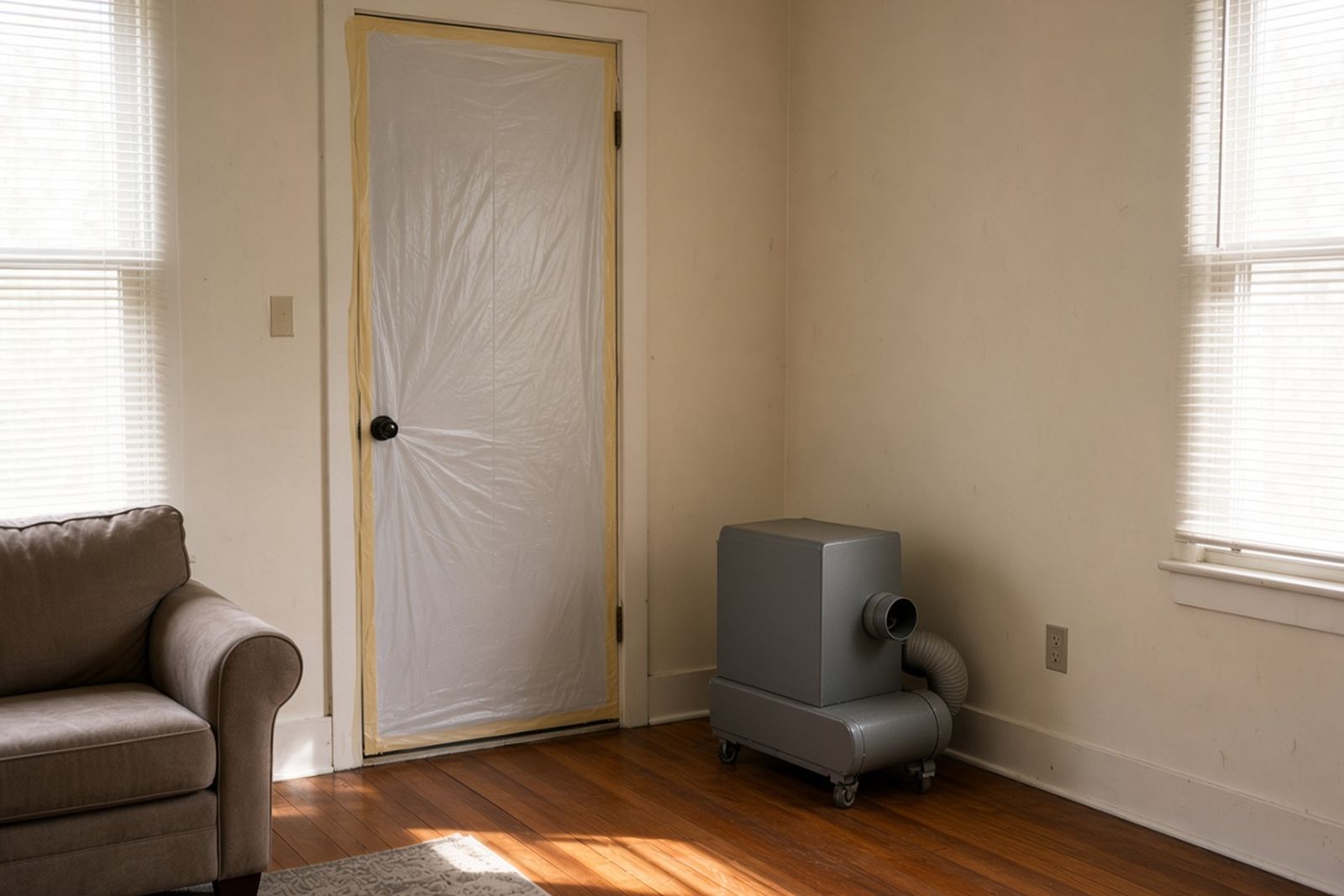
HEPA air scrubbers pull air through a filter that traps very fine particles. A second kind of machine uses the same filters but blows the cleaned air out of the closed-off work area. That keeps air pressure inside lower than in the rest of your home, which helps keep dust and odor from escaping.
These machines make sense when crews will create dust, such as cutting out drywall, pulling carpet and pad or sanding a subfloor. They also make sense when odor is strong. For a small area on hard surfaces cleaned soon after the police release, they may add little.
If your offer includes air filtering, ask where the machines will be placed and how long they will run. Ask how the filters will be handled afterward. Used filters can hold soiled material and should be bagged as waste.
Barrier supplies belong in this part of the list too. Plastic sheeting, poles for temporary walls, tape and floor protection are cheap, but they do important work. They keep the affected area apart from the rest of your home or business. They also give the crew a set place to take off protective gear. An offer that mentions air machines but no barriers is missing a piece.
Odor equipment is where offers most often drift from what you need. Foggers and electrostatic sprayers can spread disinfectant or odor remover over large areas, but they do not replace cleaning. They should come only after surfaces are cleaned, and only when the product label allows that method.
Ozone generators can reduce odor. But ozone irritates the lungs, and people, pets and plants must be kept out during treatment. It can damage some materials, such as rubber and certain fabrics. Hydroxyl generators are another option some companies use when people need to stay nearby. Either way, ask why the equipment is needed and how long your home must be empty. Ask how the company will confirm the odor is gone.
Odor treatment should come after the source is removed. If an offer leads with fogging before it explains what materials will be removed and cleaned, ask more questions.
How will investigation residue and damage be handled?
Crime scenes often include things that have nothing to do with blood. Fingerprint powder, sticky residue from evidence tape and marks from police work may be on your doors, windows, furniture and vehicles. Forced entry can leave broken glass, damaged frames and splintered wood.
The right tools here are gentle and specific. They include soft brushes and HEPA vacuums to lift loose powder, cleaners suited to each surface and adhesive removers that are safe for the finish. For glass, crews use cut-resistant gloves and hard-sided containers. Needles found at some scenes belong in puncture-proof containers made for sharp objects.
Ask whether the offer covers residue removal in every room where it appears, not just the main area. Ask too whether temporary repairs, such as boarding a broken window, are included or need a separate contractor. Get the answer in writing if you can.
Vehicles can be part of a crime scene too. If your car, truck or delivery van was involved, ask whether the company has tools suited to seat fabric, ceiling liners and tight spaces. Those areas behave differently from rooms in a building.
Verification tools and questions for comparing companies
Tools for final checks turn a promise into a record. Some meters read a quick swab of a surface and measure leftover organic residue. That helps show the cleaning was thorough, though it does not identify specific germs. Bright lights set at an angle reveal droplets and residue that overhead lighting hides. Moisture meters show whether the subfloor is dry enough to seal.
Ask when readings will be taken and what counts as a passing result for that company. Ask whether you will receive the readings and photos in writing. Equipment that is used but never recorded gives you little to rely on later.
A few direct questions can reveal a lot. Which specific products will you use, and can I see their labels? Why does my scene need each machine on this list? How will you record protective gear, wet times and final checks? How is soiled equipment cleaned or disposed of afterward?
Ask how regulated waste will be packed and hauled away, which hauler will take it and who will receive the disposal records.
The best answers are calm, specific and tied to your property. If a company turns vague or pushes add-ons without explaining them, it is reasonable to get another opinion before you sign. A good company will understand why you want one.