Short answer
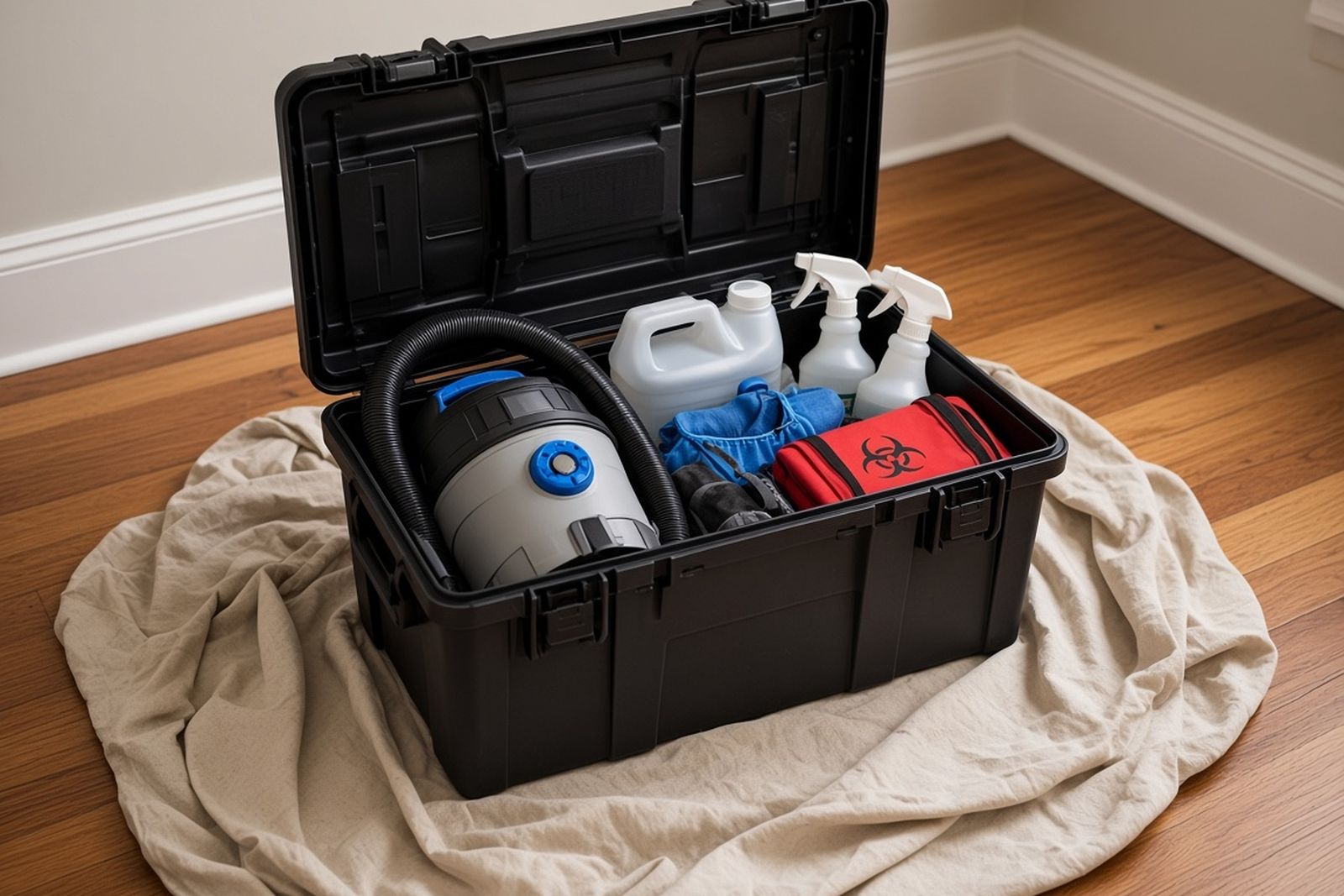
To judge any tool, ask what problem it solves and whether it supports hand cleaning or claims to replace it. Ask what the product label or maker says, what its limits are and how the results will be recorded. Useful tools include HEPA air filters, moisture meters, sprayers used after cleaning and digital reports. No device makes up for removing blood and soiled materials by hand.
Why gadgets dominate cleanup websites, and five questions to ask
Equipment is easy to photograph and easy to advertise. A glowing UV light or a sleek electrostatic sprayer looks impressive on a website. It suggests speed, science and care. That is exactly what you want to hear when you are frightened after a violent incident.
Some of these tools truly improve crime scene work. Others are useful only in narrow cases. A few are sold with claims far beyond what they can really do. You do not need to become an equipment expert. But a simple way of testing claims will help you tell a careful company from one that leans on gadgets.
The central rule is this. At a crime scene, blood and other body fluids that can carry disease have to be removed by hand. Judge every piece of technology by how well it supports that work, not by whether it promises to replace it.
Whenever a company mentions a device or product, the questions below will quickly show you whether it has a real role in your job.
A good company will answer without stalling and without overselling. If the reply is vague, treat that as a warning sign. Do the same if every tool is described as killing all germs in an instant.
- What exact problem does this solve at my property?
- Does it come before, during or after the hand cleaning, and why?
- What does the label or maker say about how to use it?
- What can it not do, and what will you use to fill those gaps?
- How will its use and results show up in my final report?
Tools that trace where blood traveled
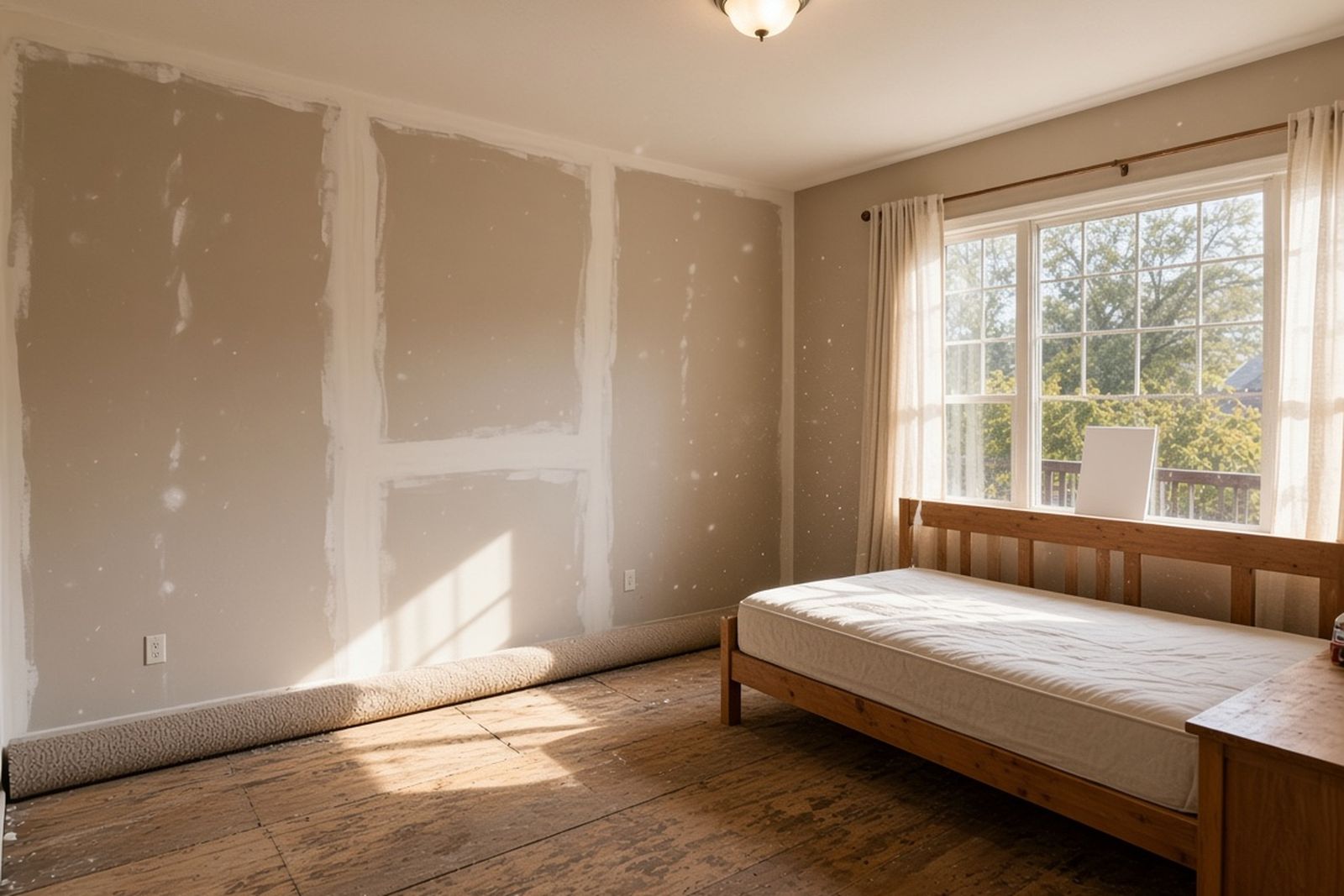
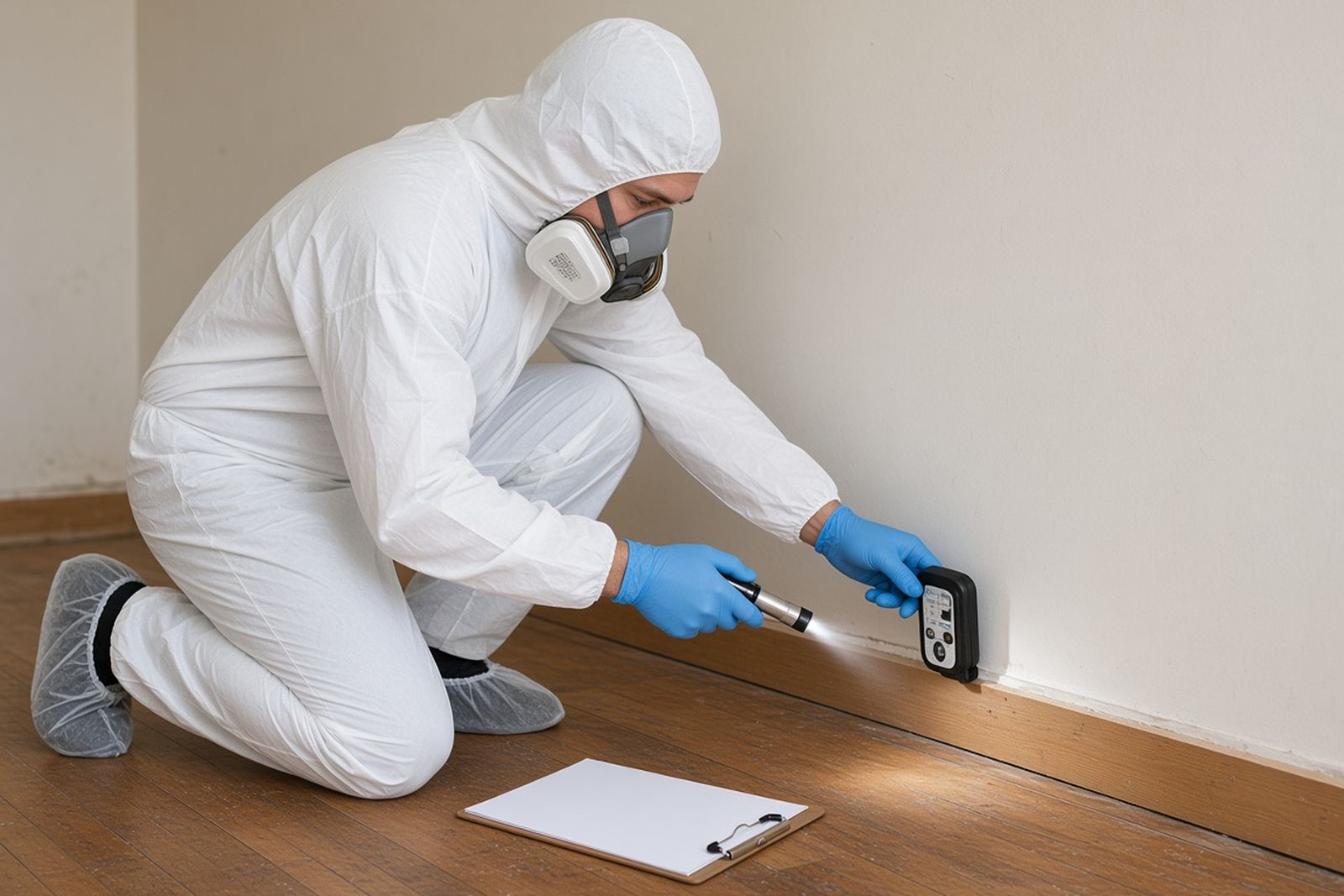
Much of the skill in crime scene cleanup is finding things. Blood can seep under baseboards, into carpet pad, between floorboards or behind trim. Good lighting is the simplest and most important tool here. Strong work lights set at an angle reveal stains and residue that ordinary room lighting hides.
Moisture meters can help crews judge whether liquid soaked into flooring or drywall, especially soon after an incident. Some companies use small cameras on flexible tubes to look inside walls or under cabinets without opening them fully. These tools cut down on guessing. They can limit how much of your home is torn out without need.
Investigators use special lights and test chemicals that are made to reveal evidence, not to confirm a cleanup. If these show up in a sales pitch, they tell you little about the quality of the cleaning. So ask what the crew does with the information those tools provide.
These tools are only as good as the person reading them. A moisture reading means little unless the worker knows what is normal for that material in your home. A camera image of the inside of a wall needs someone trained to read stains and residue. Ask who on the crew will use these tools and how they record what they find.
Sprayers, UV lights, ozone and hydroxyl machines
Electrostatic sprayers, foggers and misters are ways of applying a liquid product. They can help cover large or complex areas, such as the inside of a vehicle or a room with many surfaces. They do not replace scrubbing. Most disinfectants are made to work on surfaces that have already been cleaned. For a small, clearly marked area, careful hand cleaning usually works better than fogging. A good company will explain to you why it chose one method over the other.
The CDC describes sanitizing as reducing germs on surfaces to levels considered safe and disinfecting as killing remaining germs, with cleaning always performed first. So the order matters. If a surface still has dried blood on it, a sprayer is not likely to do what its label says.
Federal law also shapes this choice. As EPA explains, FIFRA requires all pesticides, including disinfectants, sold or distributed in the United States to be registered by EPA. FIFRA is the federal pesticide law. Ask which registered product is going into the sprayer and whether its label allows it to be applied that way. Some products are approved for spraying or fogging. Many are not.
Ultraviolet-C devices, or UV lights, can knock out some germs on surfaces the light shines on directly. They have real limits. Shadows, dust, organic soil and distance all weaken their effect. They do nothing for blood soaked into soft materials. At a crime scene, UV is at most an extra step after cleaning and disinfection. It is never a replacement.
Ozone generators and hydroxyl units are mainly odor tools. Odor is not usually the main problem at a crime scene that is cleaned promptly. It can matter if your scene sat for days. Ozone requires people, pets and plants to be out of the space during treatment. Hydroxyl units are generally gentler but slower.
If a company suggests any of these, ask why your situation needs it and what it is expected to achieve. If the answer is that it disinfects the whole house, ask for the product or device paperwork that supports that claim.
There is also a practical cost question. Machines that run for days add rental time, electricity and return visits to your bill. If a device is not solving a problem you really have, it is not adding value, however advanced it sounds.
What about air filtration and containment equipment?
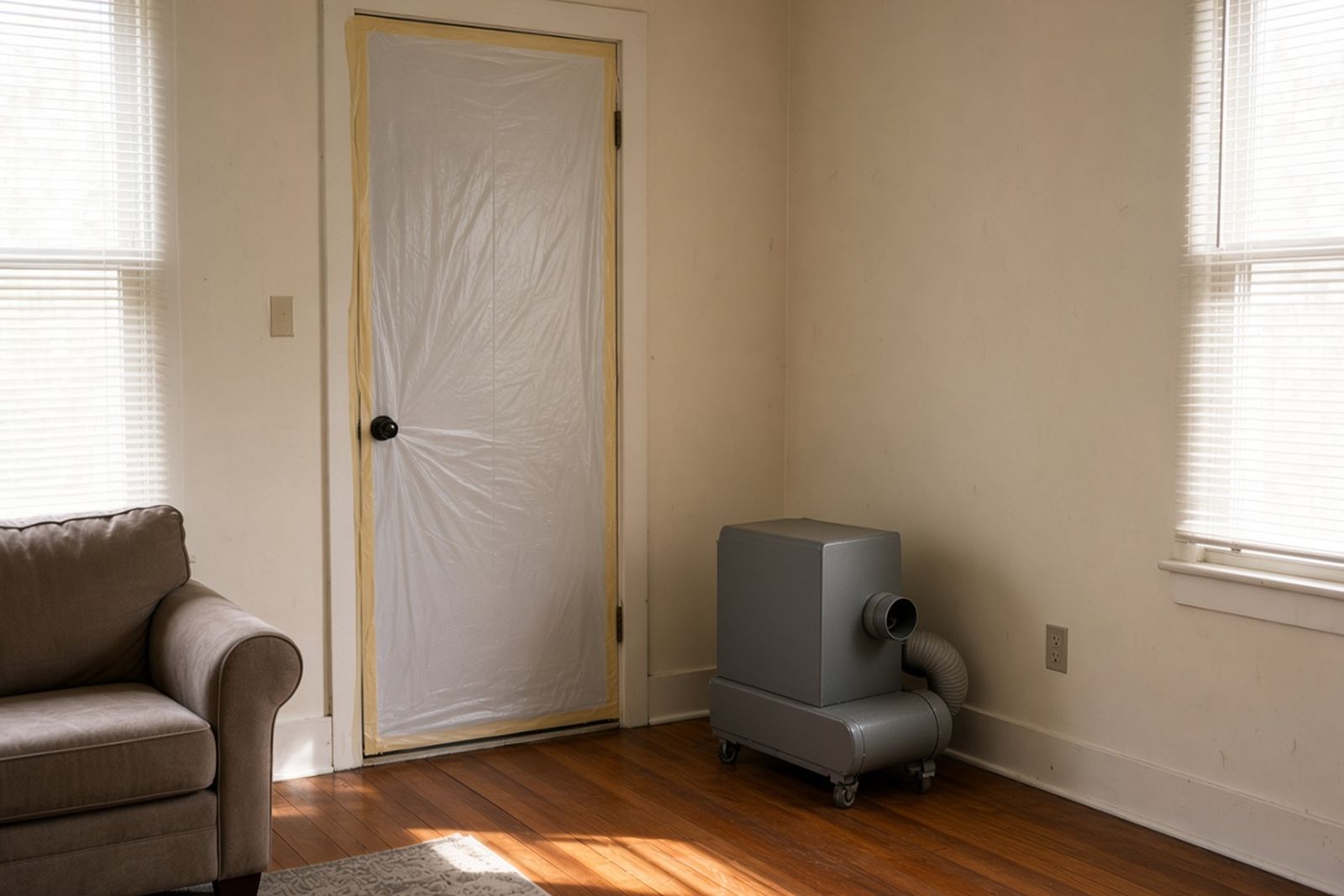
These are among the most useful and least showy tools at a crime scene. HEPA air scrubbers are machines that pull room air through very fine filters. Other machines draw air out of the work area so that dust stays inside it. Together they capture fine particles, including fingerprint powder and dust stirred up when materials are torn out. They help keep that dust from drifting into your clean rooms.
Barrier materials such as plastic sheeting, zippered temporary walls and sticky mats do a similar job. They mark where the work area ends. They lower the chance of tracking material through your home.
Ask where the crew will set up its barriers and whether air filters will run during the work. Ask how they will protect the air intake vents of your heating and cooling system. Good answers here often say more about a company's discipline than any headline technology.
Protective gear belongs in this conversation too. Powered breathing masks, better-fitting suits and improved glove materials have made the work safer and more comfortable for crews. That in turn supports more careful, less rushed work. It is reasonable to ask what breathing protection the crew uses. Ask how they decide what level of protection your scene requires.
How are digital documentation tools changing the work?
Digital tools may be the most useful new development for you as a property owner. Tablets, online job files and 360-degree cameras let crews record the scene before, during and after the work. They can tie photographs to floor plans and share updates quickly with you and your insurer.
This matters because much of what a crew does disappears from view once flooring is replaced and walls are patched. A clear photo record shows what was soiled, what was removed and how the space looked when the crew left.
Ask how you will receive your records and how long the company keeps them. Ask whether sensitive images will be handled privately. Photographs of a crime scene are deeply personal. They should never be used in marketing without your clear permission.
Some companies now offer online portals where you can see progress, approve changes to the plan and download reports. These can be a real help when you live far away or when an insurer and a landlord both need access. Ask who else will be able to see the files. Make sure you control whether any images are shared beyond the people handling your claim.
Red flags that technology is being oversold
Be careful when a company leads with a device and not with an inspection. Be careful if it promises that a machine will remove the need to take out soiled materials, or says any tool will make your home completely sterile. Be just as careful with quotes that include costly treatments not tied to anything seen at your property.
Standards and licensing for this work differ from state to state. So a company should be able to tell you which rules apply at your address. In the end, the best technology in crime scene cleanup is a trained person with the right equipment and a clear written work plan. That person also has the honesty to tell you what each tool can and cannot do.