Short answer
Crime scene cleanup is governed in layers. Federal OSHA or a state plan protects workers. Federal DOT rules cover how regulated medical waste is packaged and transported. States largely control medical waste treatment, disposal and any business registration, and counties or cities may add health, permitting or building rules. The right answer depends on your address, so check with local agencies and ask providers to explain what applies.
Why isn't there one national rulebook for crime scene cleanup?
Many people assume a single federal agency licenses crime scene cleanup companies and sets every standard. In reality, no one law covers the whole job. Different agencies regulate different pieces: worker safety, waste transport, waste treatment, business registration, building permits and sometimes consumer protection.
That patchwork exists because crime scene cleanup touches several regulated activities at once. A single job can involve employees handling blood, a vehicle carrying regulated waste on public roads, a treatment facility processing that waste and a contractor removing drywall from a home.
Understanding the layers helps you ask better questions and recognize when a provider is guessing. It also explains why a company that operates well in one state may need to change its practices when it crosses a state line.
Federal layer 1: worker safety and disinfectants
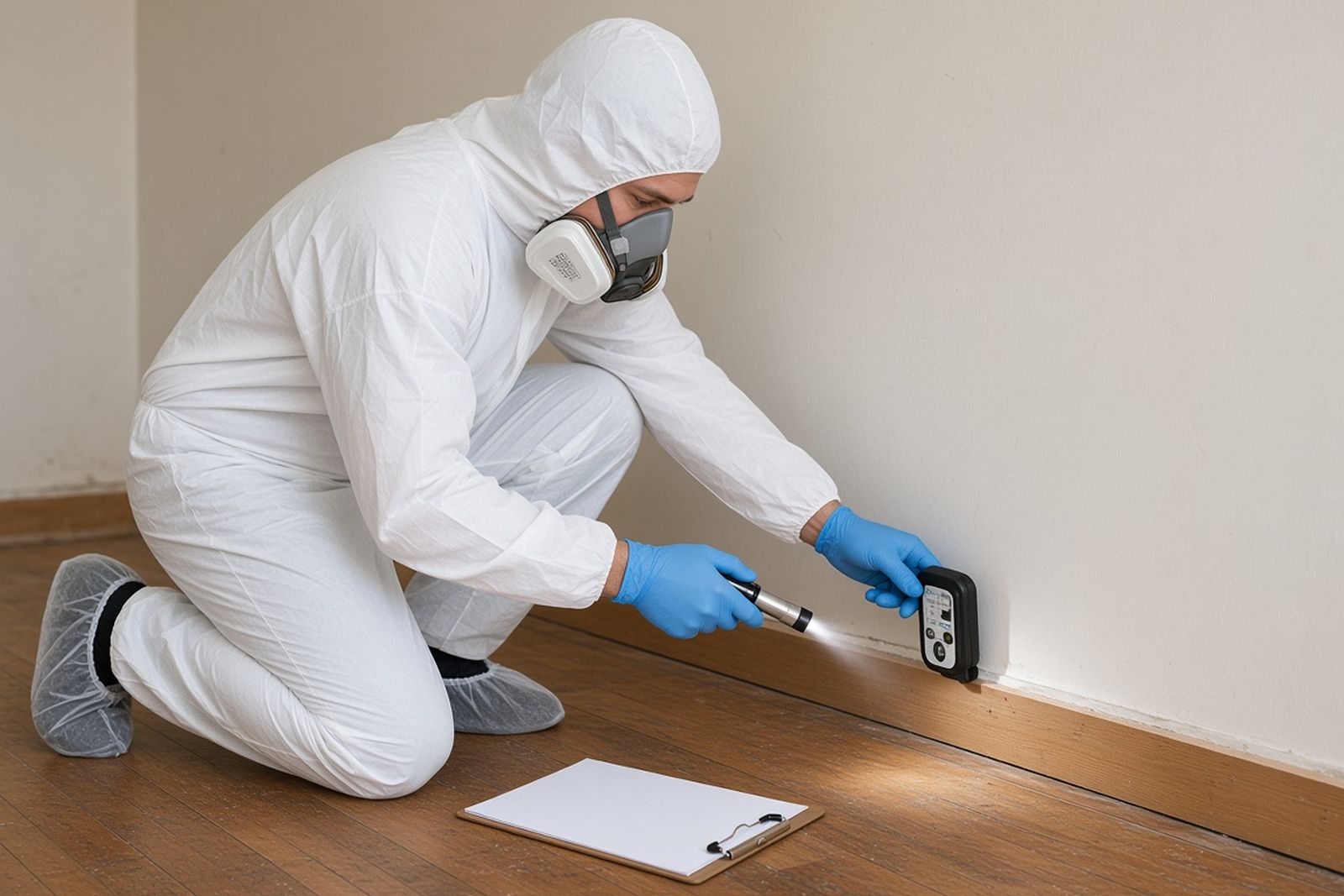
At the federal level, two families of rules matter most. The first is workplace safety. OSHA's bloodborne pathogens rules require employers to protect workers from blood and other potentially infectious materials. Related standards cover protective equipment, respirators and hazardous chemicals.
EPA registers the disinfectants crews use and oversees hazardous chemical waste under federal law, but its role in medical waste is now limited, as explained below.
- OSHA: worker protection, training, protective equipment and exposure records
- DOT: packaging, labeling and transport of regulated medical waste
- EPA: registration of disinfectants and oversight of hazardous chemical waste
Federal layer 2: moving regulated medical waste
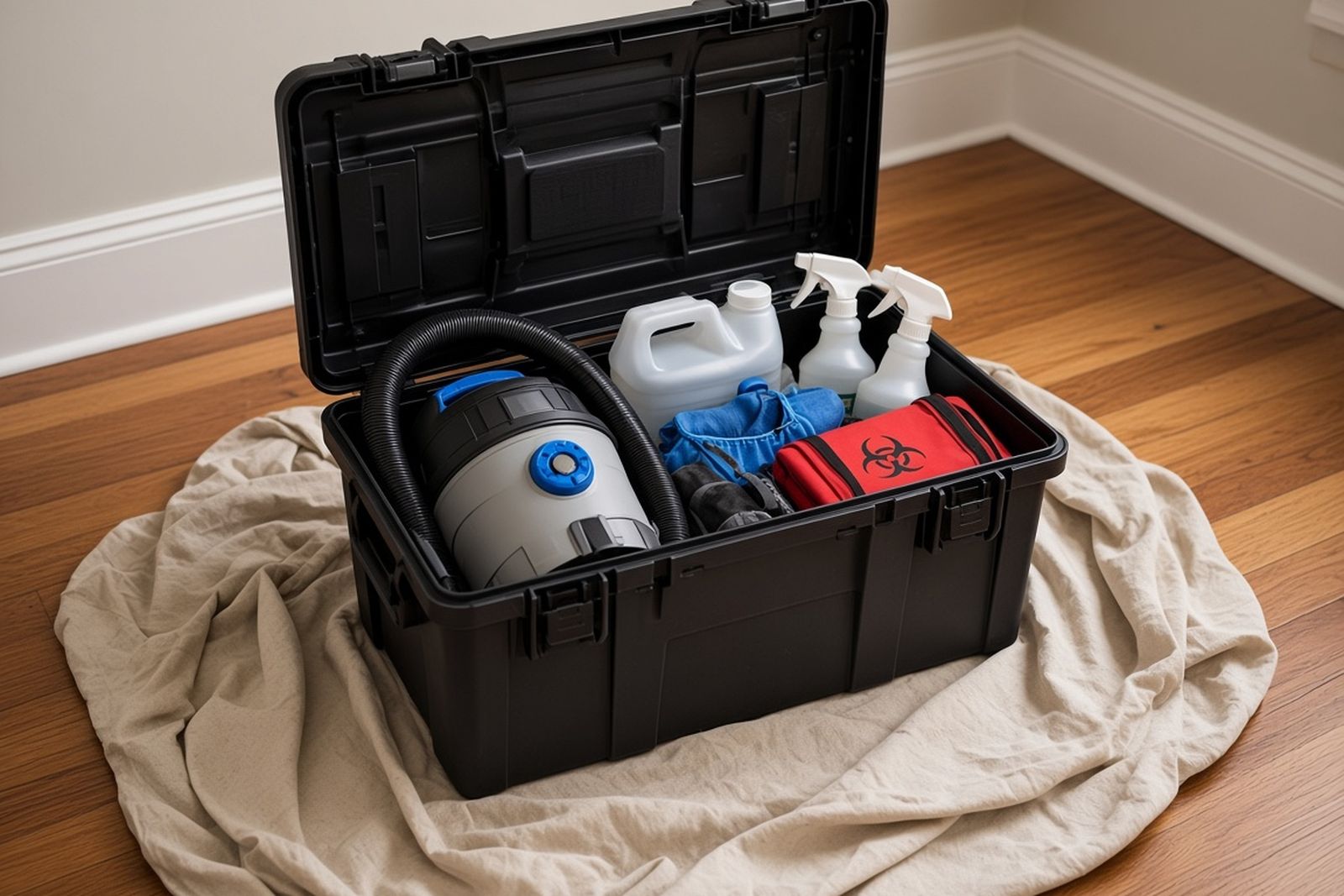
The second is transportation. The U.S. Department of Transportation, through its Pipeline and Hazardous Materials Safety Administration, sets packaging, labeling, training and shipping requirements for regulated medical waste moved on public roads. These rules apply to the hauler, whether that is the cleanup company itself or a licensed waste transporter.
Federal transport rules are detailed. They address the type of bag or container, the labels and markings it must carry, how heavy a filled package may be and what training the people preparing shipments must receive. Most property owners never see this level of detail, but a cleanup company that hauls its own waste has to follow it on every trip.
Why states control most medical waste rules
Federal oversight of medical waste once went further than it does today. EPA explains that the federal Medical Waste Tracking Act regulations expired on June 21, 1991, leaving medical waste primarily regulated by state environmental and health departments.
As a result, states decide how blood-contaminated materials from a crime scene must be classified, stored, treated and disposed of. Some states treat trauma scene waste much like medical waste from a clinic. Others have specific rules for waste generated outside health care settings. A few require cleanup businesses or waste haulers to register with a state agency.
These differences mean the same carpet section might need to go to a permitted treatment facility in one state and be handled somewhat differently in another. A provider working in your area should know which state agency oversees medical waste and how its rules apply to crime scene jobs.
It is worth knowing that states also differ in how they describe the people who do this work. Some use terms such as trauma scene or crime scene cleanup, while others simply apply general biohazard or medical waste rules. When you search a state agency website, try several phrases before concluding that no rule exists.
Do states also run their own worker safety programs?
Many do. OSHA's 2024 State Plans page lists 29 approved plans, 22 covering private and public workers and 7 covering only state and local government employees. Where a state plan covers private employers, the state agency enforces workplace safety for cleanup companies, and its standards must be at least as effective as federal rules.
Some state plans adopt federal standards almost word for word. Others add requirements, such as additional training topics, reporting rules or protections for specific hazards. A company working in a state plan jurisdiction should be able to tell you which agency inspects its crews.
State plans can matter to you as a property owner in one practical way: if you ever have a concern about how a crew behaved on your job, the agency with jurisdiction is the one that can receive a worker safety complaint.
What counties and cities can add
Local governments often have a say as well. County or city health departments may issue guidance on biohazard cleanup, respond to complaints or inspect properties declared unfit for occupancy. In some areas, a local health officer must clear a property before it can be reoccupied after certain events.
Building departments come into play when cleanup involves removing drywall, flooring or other structural materials. Minor removals may not need a permit, but rebuilding often does. Solid waste authorities may set rules about what can go into local landfills and transfer stations.
Landlords, homeowners associations and condominium boards can also have requirements of their own, such as work hours, notice to neighbors or proof of insurance. These are not government rules, but they can affect scheduling and cost.
Local rules are often the hardest to find, because they may live in a health code, a municipal ordinance or an internal department policy rather than a single published regulation. A phone call to the county health department or city building office is often faster than searching online.
The layers on a single job
To see the layers stack up, follow an invented restaurant job. A small restaurant in a city with its own health department is the site of a stabbing after closing time. The victim survives. Police process the scene and release it the next morning. The owner wants to reopen as soon as it is safe.
The cleanup company's crew works under the state's approved occupational safety plan, which adopts the federal bloodborne pathogens rules and adds a state-specific training topic. Technicians wear protective equipment chosen from a documented hazard assessment.
Contaminated materials, including a vinyl booth cushion, ceiling tile and some kitchen linens, are packaged as regulated waste under the state's medical waste rules. A registered transporter hauls the sealed containers in DOT-compliant packaging to a permitted treatment facility and provides a tracking document.
Because the site is a food establishment, the city health department asks the owner to confirm that food-contact surfaces were cleaned and sanitized before reopening, and an inspector visits. The owner also notifies the landlord, whose lease requires proof of the contractor's insurance. The job is made up, but it shows how federal, state, local and private requirements can overlap on a single job.
Victim compensation programs and insurers
They do, although they are not safety regulators. State crime victim compensation programs set their own eligibility rules, documentation requirements and payment limits for cleanup costs. Some require itemized invoices, a police report number or an application within a set period.
Insurers may require an adjuster's review, photographs or a written scope before approving any part of a claim. Coverage depends on the policy and circumstances, so ask before work starts.
Neither of these is a reason to delay necessary safety steps, but knowing their requirements in advance can save you trouble when you file.
Keep copies of everything. Invoices, photographs, disposal records and completion reports can be requested by more than one party, and it is much easier to share them if they are already organized in one folder.
How can you find out which rules apply at your address?
Start with a few reliable sources. Your state health or environmental agency usually publishes medical waste rules and any registration list. OSHA's website identifies whether your state runs a plan. Your county or city health department can explain local expectations. Your state victim compensation program can describe its documentation requirements.
Then ask each provider to explain the rules they follow in your area. A knowledgeable company will name specific agencies and describe how it complies, without hesitation. Rules vary by state and county, so confirm anything that sounds uncertain with the agency itself.
- Which state agency oversees medical waste here, and are you registered if required?
- Which occupational safety agency inspects your crews in this state?
- Who transports the waste, and will I receive disposal documentation?
- Are any local permits or health department clearances needed?
- Will your paperwork meet victim compensation or insurance requirements?
The takeaway for property owners
You do not need to master every regulation. You need a provider who does, and a few questions that let you confirm it. When a company can explain how federal, state and local rules apply to your particular job, you can feel more confident that the work will be safe, properly documented and accepted by the people who may later ask how the property was restored.
If you manage several properties, consider keeping a short reference sheet listing the agencies and contacts that apply in each location. It will save time if you ever face a similar situation again.