Short answer
A good cleanup work plan ties every line to something the crew saw. That means where blood traveled, what soaked it up, what residue police left and how each area will be checked. The fictional home below goes from police release through inspection, material choices, approved changes and the final report. It can help you know a well-built plan when a company hands you one.
Why an invented case
Real crime scenes involve real people who deserve privacy, and no two scenes are alike. An invented case lets you slow down and look at each decision without exposing anyone's story. Everything here is fictional and built for teaching: the house, the people and the timeline.
The goal is not to tell you what your cleanup should include. It is to show you the thinking behind a written work plan, which companies often call a work plan. With that, you can ask better questions, compare offers more fairly and spot a line that has nothing behind it.
A plan holds up when someone who was never at your property can read it and see why each step was needed. That reader might be an adjuster, a compensation program reviewer or a future buyer's inspector.
The fictional townhouse and who is responsible for it
In this made-up story, a homeowner named Dana lives in a two-story townhouse. It has carpeted bedrooms, a tiled entry and hardwood in the living room. One night, an intruder forces the back door. Dana's adult son is seriously hurt in a struggle near the stairs before police arrive. He survives and is treated at a hospital.
Investigators process the townhouse for two days. They collect evidence and photograph the scene. They apply fingerprint powder to the back door, the stair railing, a hallway light switch and several inside doors. When they finish, they release the property to Dana and give her a report number.
Dana owns the home. So she is the person who approves the cleanup, speaks with her insurer and decides what happens to damaged belongings. Her son is recovering and asks not to be part of the decisions.
What did the company look for during the assessment?
Dana calls a crime scene cleanup company. A supervisor arrives in protective gear to inspect the home. She tells Dana, in general terms, what she will be doing. She invites Dana to wait outside or in the kitchen, which was not affected.
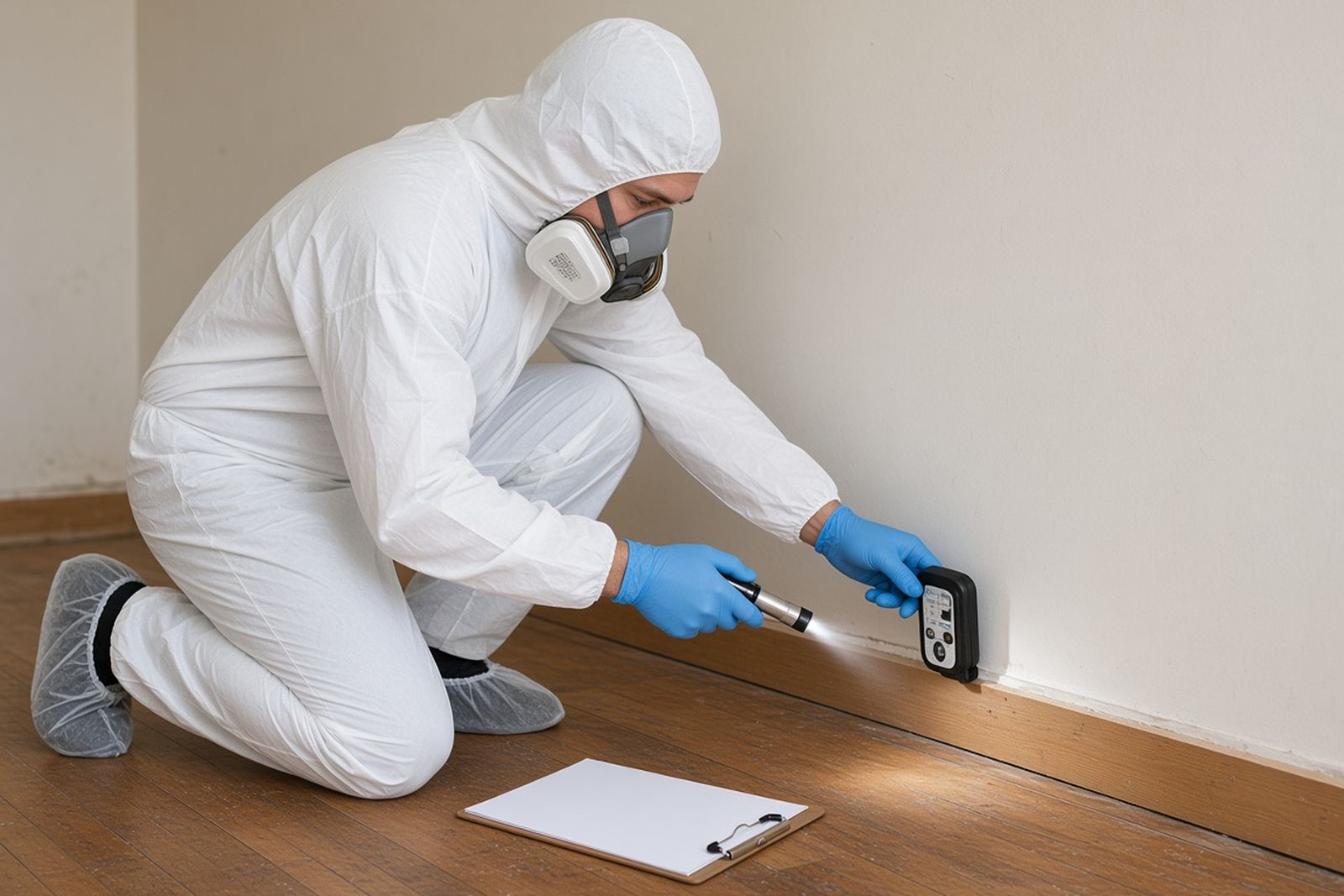
The supervisor does not stop at the stains she can see. She traces where the blood traveled: from the stair landing down four carpeted steps, onto the tile entry and along the base of the wall. She lifts a corner of the stair carpet to look at the pad and the step beneath. She checks the baseboards for fluid that seeped behind them. She looks under the stair railing and at the air return vent at the foot of the stairs. This is the kind of tracing you want to see in your own home.
She also maps the police residue on its own. Fingerprint powder sits on six doors, a railing, a switch plate and the back door frame. Fine dust has settled on the carpet and the vent cover nearby. Photographs and a quick floor sketch record all of it before anything is touched.
- Blood you can see on the stair carpet, landing and tile entry
- Blood that may have soaked into the stair pad, the steps and gaps at the baseboards
- Blood on the lower part of the hallway drywall and on the railing
- Fingerprint powder on doors, railing, switch plate and back door frame
- Possible powder in the return vent and filter near the stairs
- Kitchen, living room and upstairs bedrooms found clean on inspection
Material-by-material decisions
Each kind of material gets its own reasoning, and that reasoning goes into the work plan. The stair carpet and pad soaked up blood and cannot be made reliably clean. They will be removed and packed as regulated waste. The wooden steps underneath will be inspected once they are uncovered. If blood reached them, they will be cleaned and disinfected. Then they will be sealed or replaced, depending on how deep the blood went.
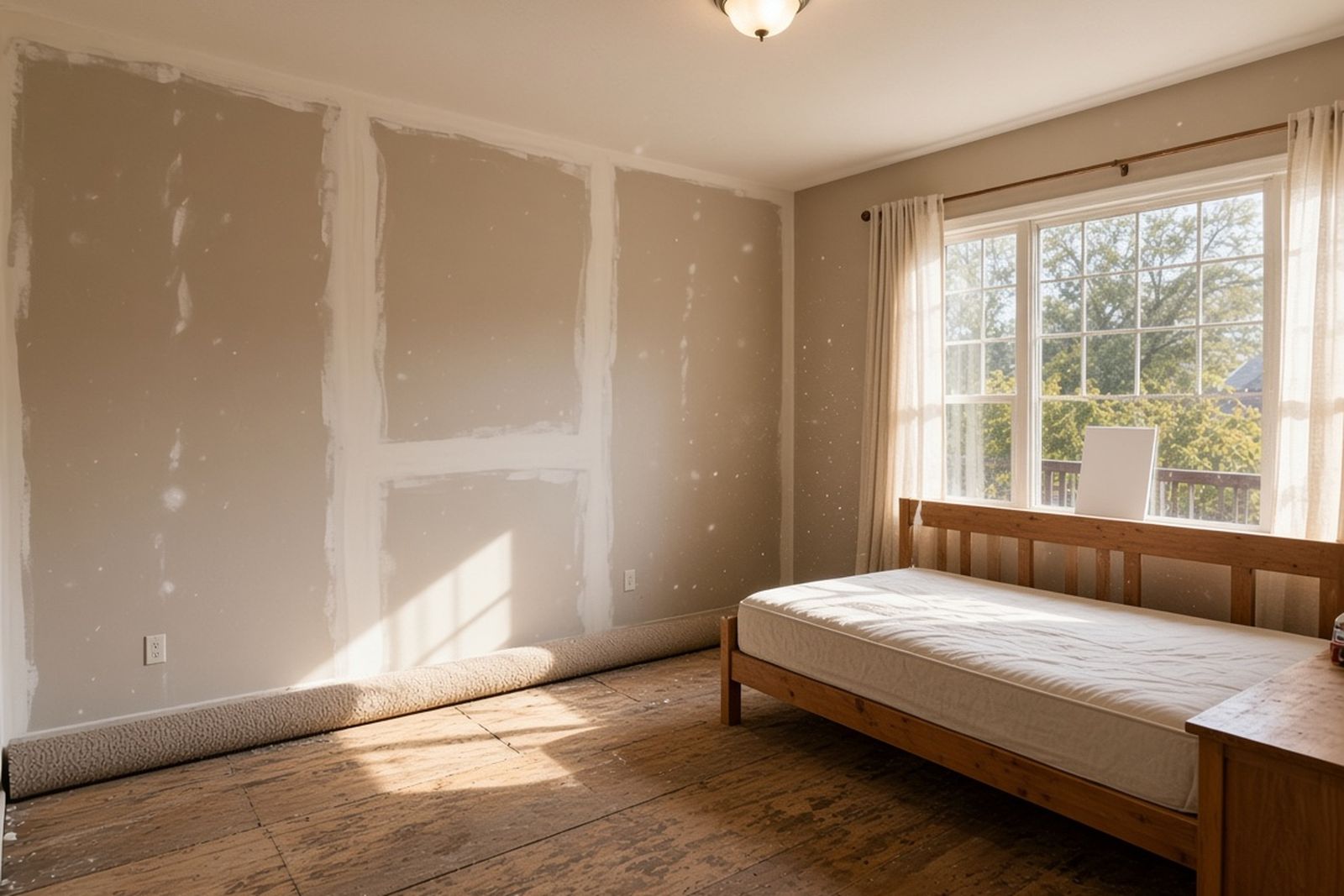
The tile entry does not absorb liquid. It can be cleaned and disinfected in place, with care for the grout lines. The hallway drywall has stains that soaked into its paper face. A section near the base will be cut out, not wiped. The railing is sealed wood and metal, which can be cleaned in place.
Fingerprint powder is treated as a different problem. It is a fine dust that smears when wiped carelessly and can drift into the air ducts. The plan calls for a vacuum with a HEPA filter, which traps very fine dust. After that come the right cleaning products for each surface, a new filter and a visual check of the return duct.
Dana's son's jacket, found on the landing, is photographed and listed. It belongs to him, so Dana asks him by text what he wants. He chooses to have it thrown away. That decision is recorded in writing. You can ask for the same kind of record for your own belongings.
The written work plan, line by line
The supervisor turns her notes into a work plan Dana can read in a few minutes. Each line names the place, the material, the action and how the crew will show it is done. Nothing is described loosely as whole-house cleaning. Your own plan should be just as specific.
The plan also lists what is not included: new carpet, new drywall, painting and a new back door lock. Those jobs belong to a general contractor and a locksmith, and the company says so plainly.
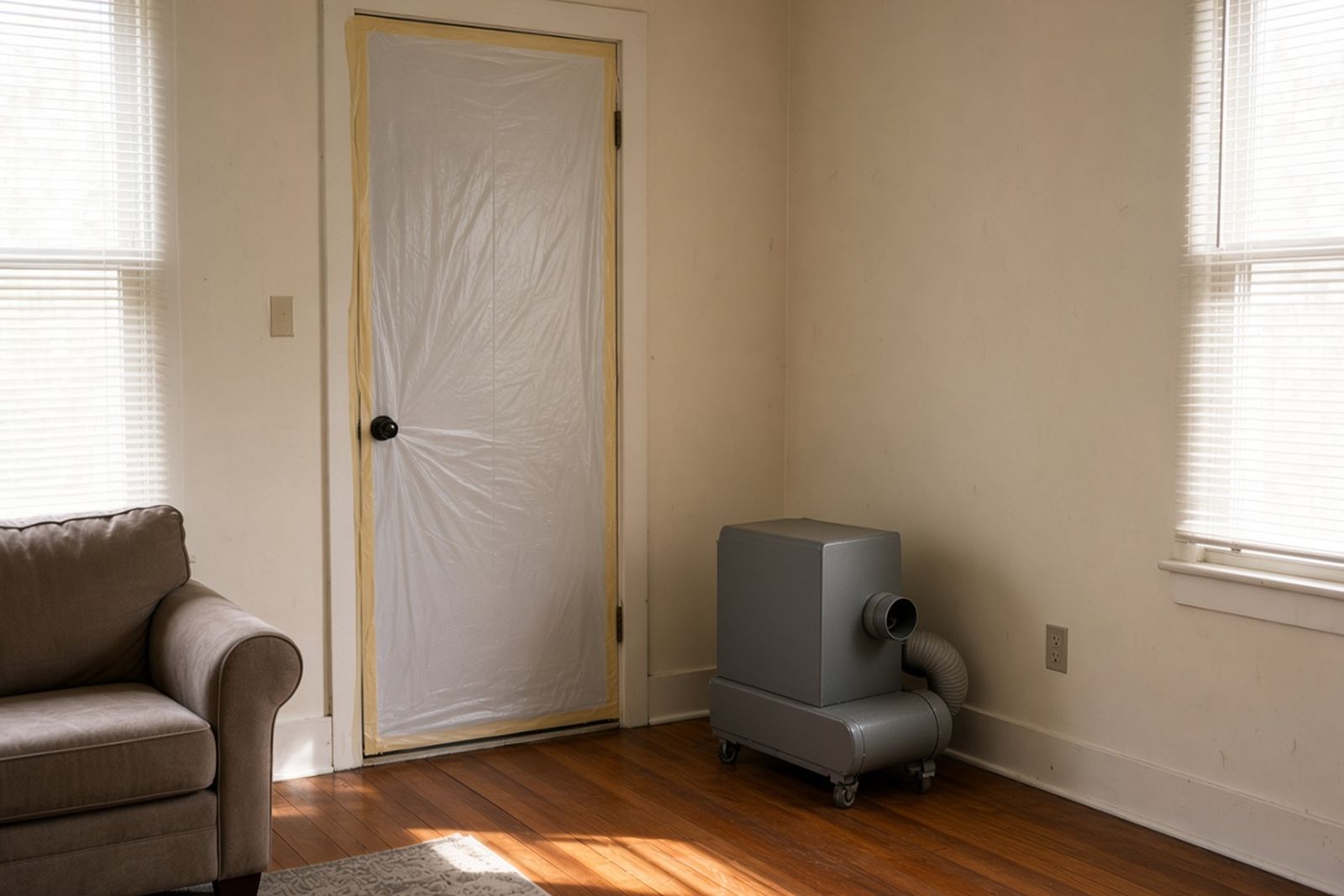
- Close off the stair and entry area; protect clean rooms and the path to the kitchen
- Remove stair carpet and pad; pack as regulated waste
- Inspect, clean and disinfect the steps; seal or replace based on what is found
- Clean and disinfect the tile entry and grout
- Remove the lower hallway drywall section at the stained area; inspect inside the wall
- Clean and disinfect railing and baseboards; remove baseboards where fluid got behind them
- HEPA vacuum and clean fingerprint powder from the listed surfaces
- Replace the return filter; inspect the return duct and clean it if powder is present
- Final visual inspection, photographs and waste disposal records
What would a weak scope for the same townhouse have looked like?
Compare Dana's plan with a version that sometimes shows up in real offers. It is a single line reading "biohazard remediation of stairway and entry, flat rate," followed by a total. It may even be cheaper. The trouble is that it tells Dana nothing. What will be removed? Will the steps be checked? Who handles the fingerprint powder? What happens to the air return?
A thin plan creates three risks. The crew might wipe the stains you can see and leave blood in the pad and steps, where odor and stains come back later. The fingerprint powder might be skipped because nobody listed it. And if the job does grow, there is no starting point to compare against. Any dispute about the bill becomes one person's word against another's.
None of this means a short plan is always dishonest. It simply means you have to ask more questions before you sign. You should expect clear answers in writing.
When the work uncovered more than expected
On day one, the stair carpet comes up. The crew finds that blood soaked through the pad and into two steps and the upright board between them. The plan had named this as a possibility, so the crew follows it. They clean, disinfect and check how deep the blood went. One step is too deeply stained and is cut out to be replaced.
Behind a baseboard at the foot of the stairs, they find something else. Fluid ran a short way under the tile threshold into a gap. This was not in the original plan. The supervisor stops, photographs it and calls Dana. She explains what she found, why it matters and what it will add to the work. Dana approves a short written change order by email before the crew goes on. A change order is a signed update to the plan and price.
This pause is the heart of a plan you can trust. Nobody added work in silence. The record shows exactly why the final invoice differs from the first estimate. You can ask your own cleanup company to work the same way.
Checking the work and the final report
When the crew finishes, the supervisor walks each area with the plan in hand. Hard surfaces are inspected under strong light. The company's written procedure also calls for a few quick swab tests on the tile and railing as a second check. These swabs show leftover organic residue. They do not detect germs. The return duct is photographed after cleaning. Removed materials are logged by bag count and disposed of through a licensed hauler.
Dana receives a report with photographs from before, during and after the work. It includes the signed plan and change order, the list of discarded items with her son's written direction, and the disposal records. The report also notes the materials left for the contractor to replace. You can ask your company for the same set of records.
Dana files with her insurer and also asks the victim advocate about compensation. Programs differ by state. For comparison, the Ohio Attorney General's fiscal year 2024 report states that Ohio's Crime Victims Compensation Program caps crime scene cleanup reimbursement at $750 per claim. Other states set their own limits. Dana is told to check who qualifies and what the limits are with her own state program.
Taking the lessons into your own situation
You do not need to understand every technical term to judge a work plan. Look for three things. First, is each line tied to a place and a material you can find on a photograph or sketch? Second, does the plan treat blood cleanup and police residue as separate jobs? Third, does it explain how the company will tell you if the work needs to grow?
If an offer only lists hours and a total, ask the company to break it down the way Dana's plan did. A company sure of its inspection will not mind. And if you are the person who lived through the incident, remember this. You are allowed to hand these decisions to a trusted relative, friend or advocate. Taking care of yourself is part of the recovery too.